devotions:don't seek first the Kingdom, and don't make God your top priority!


I know, I know, you have it memorized that way,
your Bible says it that way..
.............and so does the song.
But..
"First" implies one would seek something second, third, etc. But he says "seek...the Kingdom, and all these things [food, clothes etc] will be added to you." Not: "seek the Kingdom, and then you can seek food , clothes." No, "all these things" are given you, without you seeking them at all. They are a by-product of seeking the one thing.
To seek them..even sincerely; even secondly... would be idolatry.
"Purity of heart," Kierkegaard said, "is to will one thing."
Christianity is seeking one thing: the Kingdom thing.
Besides, we are so far only quoting a (poor)translation of Matthew's version of this saying
In Luke's version, the word "first" is not there...in any translation.
Don't take my word for it..check it out!
How often have you seen it suggested (here in the West, of course), that our priority list should follow this order:
- God
- family
- church
- work etc etc
Give it up. Get your priorities right, and ditch the priority list.
Read Joel Green (below) carefully and carefully; and then check out Matthew 6 all over again:
When Jesus calls on would-be disciples to "seek first the Kingdom," is he thinking of a list of priorities with "my relationship with God" at the head? In fact, a closer reading of this part of the Sermon on the Mount may indicate that putting God at the top of our list of priorities is precisely what we must never do.
Some may take offense at this suggestion. After all, they may say, look at the passage! Doesn't Matthew 6:25-24 teach just this order of priorities? Doesn't it say, "Don't put food and drink first; don't put clothing concerns first; rather, out the Kingdom of God first'?" On the basis of this passage, should we not say that "seeking first God's kingdom" must occupy the top spot on our list of priorities? Is this not what Jesus is teaching?"
Maybe be can get closer to the meaning of this passage if we paraphrase Matthew 6:33 differently. Consider these alternatives: "Let the Kingdom of God be at the center of your life...not at the top."
"Let the Kingdom of God set the standards for your life." "Let the kingdom of God determine how you live, how you work, how you communicate, how you play." These alternative readings make good on the fact that the Greek word often translated "first" in this context, proton, is used in the gospels not only to denote "the first in a series," but also "that upon which everything hinges."
In other words, do not put the Kingdom of God first on your priority list; rather, let the Kingdom of God determine your priority list! [emphasis mine]
In order to measure our response to Jesus' message in Matthew 6:33, we must ask more than, have I prayed today, or have I read the Bible today? As important as those spiritual disciplines are, they are not the heart of Jesus' message here. We must go further, deeper. We must begin to ask: What had God's kingdom to do with the job I am doing? The way I drive? The church I attend? The friends I have? How I relate to my next-door neighbor. And so on. -Joel Green, The Kingdom of God: It's Meaning and Mandate, pp. 68-69 (review and summaryhere)

FPU's TIm Geddert:


But seek his kingdom, and these things will be given to you as well.
Luke 12:31
----------------
Matthew 18:15-19 “If your brother or sister sins, go and point out their fault, just between the two of you. If they listen to you, you have won them over. But if they will not listen, take one or two others along, so that ‘every matter may be established by the testimony of two or three witnesses.’[ If they still refuse to listen, tell it to the church; and if they refuse to listen even to the church, treat them as you would a pagan or a tax collector.
“Truly I tell you, whatever you [all of you] bind on earth will be bound in heaven, and whatever you [all of you] loose on earth will be loosed in heaven.
“Again, truly I tell you that if two of you on earth agree about anything they ask for, it will be done for them by my Father in heaven. For where two or three gather in my name, there am I with them
--
.. discussion on the whole concept of church discipline/"excommunication":
Of course the KRDU "viral video," "The Heat is On" was played...as it is based on the "sinning brother" of Matthew 18:
Matthew 18 Outline
(by Greg Camp/Laura Roberts):
1 Question #1: Who is Greatest?
2-17 Responses (each are counter proposals)
2-10 Response #1: Children
2-4 Counter Proposal: Accept children
5-9 Threat: If cause scandal
10 Show of force: Angels protect
12-14 Response #2: Sheep
12-14 Counter Proposal: Search for the 1 of 100 who is lost
15-17 Response #3: Brother who sins (counter proposal)
15a Hypothetical situation: If sin
15-17 Answer: Attempt to get brother to be reconciled
17b If fail: Put him out and start over
18-20 Statement: What you bind or loose
21-22 Question #2: How far do we go in forgiveness?
23-35 Response #1: Parable of the forgiving king/unforgiving servant
IMPORTANT QUESTION..
Read verse 17:" if they refuse to listen even to the church, treat them as you would a pagan or a tax collector".. and then ask yourself:
"How did Jesus treat "tax collectors and pagans?"
Tony Jones writes:
but because anyone, including Trucker Frank, can speak freely in this church, my seminary-trained eyes were opened to find a truth in the Bible that had previously eluded me.”...That truth emerged in a discussion of Matthew 18's "treat the unrepentant brother like a tax collector or sinner.":
"And how did Jesus treat tax collectors and pagans?" Frank asked aloud, pausing, "as of for a punchline he'd been waiting all his life to deliver,"....., "He welcomed them!""
-Tony Jones, The New Christians, p.92
More on Trucker Frank here; he can interrupt my sermons anytime.
..In a "Centered Set" kind of way.
.

 o
o

- ----
Tonight, three videos:
- Weight of the World/Gethsemane
- Lamb of God
- Roll Away the Stone
11/7:Three Acted Parables about Nationalism: Matthew 21

__How might Jesus have been re-tempted as his death drew near?
__What is the prophetic symbolism of the day that Jesus entered Jerusalem?
__What is the prophetic symbolism of the way that Jesus entered Jerusalem?
__What is the prophetic symbolism of the crowds waving palm branches?
___Why was Jesus angry in the "temple tantrum" include class notes, quotes from Upside Down Kingdom (pp 150-153) and the NT Wright video in your answer.
___What is the prophetic symbolism of the fig tree?
--
Matthew chapter 19-25: We started two "literary world" charts on the 2nd half of Matthew:

1)We noted an inclusio on the topic of taxes...see 17:24-26 and 22:15-22..
must have something to do with "subversion of empire."
2)We noted two mentions (parallelism, or inclusio) of mountains:
The Mount of Transfiguration (where Jesus was revealed in majesty and glory) in 17:1
... and the mountain that Jesus referred to in 21:21, which is immediately after the temple tantrum ("if you have faith, you can say to this mountain, "Be gone and cast into the sea).
We called this a "tale of two mountains"...and suggested it could illustrate "Transformation of temple," One mountain hosted Jesus as glorified, transfigured Son of God, and one mountain was the "temple mount," or Mt.Zion, representing the temple (and the temple system of worship) which is about to come to an end (and is emphasized in this section, see Matthew 24:1-2).
---------------------------------------
=========
Palm Sunday:
--
 we watched the "Lamb of God" video and discussed how it was actually a nationalistic misunderstanding. If Jesus showed up personally in your church Sunday, would you wave the American flag at him, and ask him to run for president?
  Post your answer in the comments section below...at bottom of this post
a)Van Der Laan:
Jesus on his way to Jerusalem
On the Sunday before Passover, Jesus came out of the wilderness on the eastern side of the Mount of Olives (just as the prophecy said the Messiah would come).
People spread cloaks and branches on the road before him. Then the disciples ?began, joyfully, to praise God in loud voices for all the miracles they had seen? (Luke 19:37). The crowd began shouting, ?Hosanna,? a slogan of the ultra-nationalistic Zealots, which meant, ?Please save us! Give us freedom! We?re sick of these Romans!?
The Palm Branches
The people also waved palm branches, a symbol that had once been placed on Jewish coins when the Jewish nation was free. Thus the palm branches were not a symbol of peace and love, as Christians usually assume; they were a symbol of Jewish nationalism, an expression of the people?s desire for political freedom __LINK to full article
b)FPU prof Tim Geddert:
Palm Sunday is a day of pomp and pageantry. Many church sanctuaries are decorated with palm fronds. I’ve even been in a church that literally sent a donkey down the aisle with a Jesus-figure on it. We cheer with the crowds—shout our hosannas—praising God exuberantly as Jesus the king enters the royal city.
But if Matthew, the gospel writer, attended one of our Palm Sunday services, I fear he would respond in dismay, “Don’t you get it?” We call Jesus’ ride into Jerusalem “The Triumphal Entry,” and just like the Jerusalem crowds, we fail to notice that Jesus is holding back tears.
Jesus did not intend for this to be a victory march into Jerusalem, a political rally to muster popular support or a publicity stunt for some worthy project. Jesus was staging a protest—a protest against the empire-building ways of the world.
LINK: full article :Parade Or Protest March
c)From Table Dallas:
Eugene Cho wrote a blog post back in 2009 about the irony of Palm Sunday:-Link
The image of Palm Sunday is one of the greatest ironies. Jesus Christ – the Lord of Lords, King of Kings, the Morning Star, the Savior of all Humanity, and we can list descriptives after descriptives – rides into a procession of “Hosanna, Hosanna…Hosanna in the Highest” - on a donkey – aka - an ass.He goes on to say it’s like his friend Shane Claiborne once said, “that a modern equivalent of such an incredulous image is of the most powerful person in our modern world, the United States President, riding into a procession…on a unicycle.”
================
Temple Tantrum:

I have actually heard people say they fear holding a bake sale anywhere on church property…they think a divine lightning bolt might drop.
Some go as far as to question the propriety of youth group fundraisers (even in the lobby), or flinch at setting up a table anywhere in a church building (especially the “sanctuary”) where a visiting speaker or singer sells books or CDs. “I don’t want to get zapped!”
All trace their well-meaning concerns to the “obvious” Scripture:
"Remember when Jesus cast out the moneychangers and dovesellers?"
It is astounding how rare it is to hear someone comment on the classic "temple tantrum" Scripture without turning it into a mere moralism:
"Better not sell stuff in church!”
Any serious study of the passage concludes that the most obvious reason Jesus was angry was not commercialism, but:
racism.
I heard that head-scratching.
The tables the Lord was intent on overturning were those of prejudice.
I heard that “Huh?”
A brief study of the passage…in context…will reorient us:
Again, most contemporary Americans assume that Jesus’ anger was due to his being upset about the buying and selling. But note that Jesus didn't say "Quit buying and selling!” His outburst was, "My house shall be a house of prayer for all nations" (Mark 11:17, emphasis mine). He was not merely saying what he felt, but directly quoting Isaiah (56:6-8), whose context is clearly not about commercialism, but adamantly about letting foreigners and outcasts have a place in the “house of prayer for all nations”; for all nations, not just the Jewish nation. Christ was likely upset not that moneychangers were doing business, but that they were making it their business to do so disruptfully and disrespectfully in the "outer court;” in the “Court of the Gentiles” (“Gentiles” means “all other nations but Jews”). This was
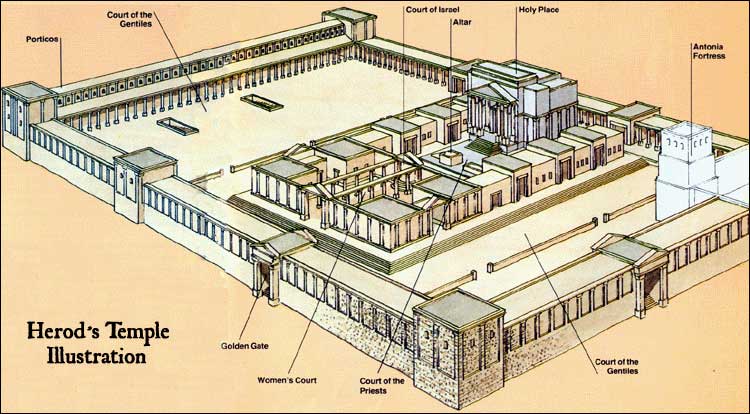
the only place where "foreigners" could have a “pew” to attend the international prayer meeting that was temple worship. Merchants were making the temple "a den of thieves" not (just) by overcharging for doves and money, but by (more insidiously) robbing precious people of “all nations” a place to pray, and the God-given right to "access access" to God.
Money-changing and doveselling were not inherently the problem. In fact they were required; t proper currency and “worship materials” were part of the procedure and protocol. It’s true that the merchants may have been overcharging and noisy, but it is where and how they are doing so that incites Jesus to righteous anger.
The problem is never tables. It’s what must be tabled:
marginalization of people of a different tribe or tongue who are only wanting to worship with the rest of us.
In the biblical era, it went without saying that when someone quoted a Scripture, they were assuming and importing the context. So we often miss that Jesus is quoting a Scripture in his temple encounter, let alone which Scripture and context. Everyone back then immediately got the reference: “Oh, I get it, he’s preaching Isaiah, he must really love foreigners!”:
“Foreigners who bind themselves to the Lord…all who hold fast to my covenant-theseI will bring to my holy mountain and give them joy in my house of prayer. Their burnt offerings and sacrifices will be accepted on my altar; for my house will be called a house of prayer for all nations.” (Isaiah 56:6-8, emphases mine)Gary Molander, faithful Fresnan and cofounder of Floodgate Productions, has articulated it succinctly:
“The classic interpretation suggests that people were buying and selling stuff in God’s house, and that’s not okay. So for churches that have a coffee bar, Jesus might toss the latte machine out the window.
I wonder if something else is going on here, and I wonder if the Old Testament passage Jesus quotes informs our understanding?…Here’s the point:
Those who are considered marginalized and not worthy of love, but who love God and are pursuing Him, are not out. They’re in..
Those who are considered nationally unclean, but who love God and are pursuing Him, are not out. They’re in.
God’s heart is for Christ’s Church to become a light to the world, not an exclusive club. And when well-meaning people block that invitation, God gets really, really ticked.”
(Gary Molander, http://www.garymo.com/2010/03/who-cant-attend-your-church/)
Still reeling? Hang on, one more test:
How often have you heard the Scripture about “speak to the mountain and it will be gone” invoked , with the “obvious” meaning being “the mountain of your circumstances” or “the mountain of obstacles”? Sounds good, and that will preach. But again, a quick glance at the context of that saying of Jesus reveals nary a mention of metaphorical obstacles. In fact, we find it (Mark 11:21-22) directly after the “temple tantrum.” And consider where Jesus and the disciples are: still near the temple, and still stunned by the “object lesson” Jesus had just given there about prejudice. And know that everyone back then knew what most today don’t: that one way to talk about the temple was to call it “the mountain” (Isaiah 2:1, for example: “the mountain of the Lord’s temple”) .
Which is why most scholars would agree with Joel Green and John Carroll:
“Indeed, read in its immediate context, Jesus’ subsequent instruction to the disciples, ‘Truly I tell you, if you say to this mountain..’ can refer only to the mountain on which the temple is built!... For him, the time of the temple is no more.” (“The Death of Jesus in Early Christianity,” p. 32, emphasis mine).In Jesus’ time, the temple system of worship had become far too embedded with prejudice. So Jesus suggests that his followers actually pray such a system, such a mountain, be gone.
Soon it literally was.
In our day, the temple is us: the church.
And the church-temple is called to pray a moving, mountain-moving, prayer:
“What keeps us from being a house of prayer for all nations?”
Or as Gary Molander summarizes:
“Who can’t attend your church?” ----------------------------------------------------
More on Jesus' temple tantrum as against the racist religious system, and not all about "don't sell stuff in church.":
By intercalating the story of the cursing of the fig tree within that of Jesus' obstruction of the normal activity of the temple, Mark interprets Jesus' action in the temple not merely as its cleansing but its cursing. For him, the time of the temple is no more, for it has lost its fecundity. Indeed , read in its immediate context, Jesus' subsequent instruction to the disciples, "Truly I tell you, if you say to this mountain, 'Be taken up and thrown into the sea'" can refer only to the mountain on which the temple is built!
What is Jesus' concern with the temple? Why does he regard it as extraneous to God's purpose?
Hints may be found in the mixed citation of Mark 11:17, part of which derives from Iasaih 56:7, the other from 11:7. Intended as a house of prayer for all the nations, the temple has been transformed by the Jewish leaders in Jerusalem into a den of brigands. That is, the temple has been perverted in favor of both socioreligious aims (the exclusion of Gentiles as potential recipients of divine reconciliation) and politico-economic purposes (legitimizing and
consolidating the power of the chief priests, whose teaching might be realized even in the plundering of even a poor widow's livelihood-cf 12:41-44)....
...In 12:10-11, Jesus uses temple imagery from Psalm 118 to refer to his own rejection and vindication, and in the process, documents his expectation of a new temple, inclusive of 'others' (12:9, Gentiles?) This is the community of his disciples.
-John T, Carroll and Joel B. Green, "The Death of Jesus in Early Christianity," p. 32-33
--
 |
| Some revolutionaries from all nations overlooking the Temple Mount, on our 2004 trip |

"...God has chosen the people of Israel to dwell among the nations so that all nations can enter teh covenant with God. But the temple Jesus now enters now functions in quite a different way, supporting a separatist cause, cutting Israelites off from their neighbors. Furthermore, the spirit encouraged within the temle is one of violence and destruction: it had become a 'den of revolutionaries' (Mark 11:17, authors' translation). Israel has turned its election into separatist privilege....a new temple, Jesus' resurrection life in the renewed people of God, can become the light for the nations that God intends." (The Drama of Scripture, p, 176)
In the footnote to the above the authors clarify:
"The Greek word here is Iestes ansd most likely refers to revolutionaries who sought to obverthros Rome with violence, see also on Mk 14:48, 15:27, John 18;40, see NT Wright, Jesus and The Victory of God, 419-20"--

Hey, maybe Jesus- concern WAS commercialism after all:
is racism + violence=commercialism?
Also...this called to mind Erwin McManus in "The Barbarian Way":
"God always revolts against religions he starts"That's a shock value statement, of course.
So it can't be "truly" true.
But it speaks the truth in part; and is partly true.
But two questions:
- Didn't the fact that the temple was not completely separatist/sectarian even in the "Old" Testament (one of the passages Jesus quotes ..to counter racism..in the tantrum is Isaiah 56:6-8) help? Was the religion/temple of God in Judaism inherently racist, even if God-ordained? Weren't the dovesellers/moneychangers the violators, not temple Judaism itself?
- If we picture God "revolting" we might ironically envision him as a but too "violent.
Jesus comes off violently peaceful (not violently peaceful in the temple..
----------------------------------------
Excerpts from a good Andreana Reale article in which she sheds light on Palm Sunday and theTemple Tantrum:
,, Jesus’ entrance into Jerusalem actually echoes a custom that would have been familiar to people living in the Greco-Roman world, when the gospels were written.
Simon Maccabeus was a Jewish general who was part of the Maccabean Revolt that occurred two centuries before Christ, which liberated the Jewish people from Greek rule. Maccabeus entered Jerusalem with praise and palm leaves—making a beeline to the Temple to have it ritually cleansed from all the idol worship that was taking place. With the Jewish people now bearing the brunt of yet another foreign ruler (this time the Romans), Jesus’ parade into Jerusalem—complete with praise and palm leaves—was a strong claim that He was the leader who would liberate the people.
Except that in this case, Jesus isn’t riding a military horse, but a humble donkey. How triumphant is Jesus’ “triumphant entry”—on a donkey He doesn’t own, surrounded by peasants from the countryside, approaching a bunch of Jews who want to kill Him?
And so He enters the Temple. In the Greco-Roman world, the classic “triumphant entry” was usually followed by some sort of ritual—making a sacrifice at the Temple, for example, as was the legendary case of Alexander the Great. Jesus’ “ritual” was to attempt to drive out those making a profit in the Temple.
The chaotic commerce taking place—entrepreneurs selling birds and animals as well as wine, oil and salt for use in Temple sacrifices—epitomized much more than general disrespect. It also symbolised a whole system that was founded on oppression and injustice.
In Matthew, Mark and John, for example, Jesus chose specifically to overturn the tables of the pigeon sellers, since these were the staple commodities that marginalised people like women and lepers used to be made ritually clean by the system. Perhaps it was this system that Jesus was referring to when He accused the people of making the Temple “a den of robbers” (Mt 21.13; Mk 11.17; Lk 19.46).
Andreana Reale
--
--
see also:
Van Der Laan on Court of the Gentiles here
temple tantrum/ which curtain was torn?
--
Tonight, three videos:
- Weight of the World/Gethsemane
- Lamb of God
- Roll Away the Stone
Summary:Faith Lessons by Ray Vander Laan: The Weight o
f the World
------------------------------------
"The Weight of The World" and "Lamb of God". Neither is online, but suffice to say these images from the first trip:
What did you learn about a millstone from tonight's video clip?:


and these from the second:


Some notes from radio interview related to the video:
.“I’d like to take this chance to share a few thoughts with you today. God put something very different in my life when I was about 19. I had a chance to go to Israel and study, and when I was there, I discovered that there was an element in my own Christian background that had been somewhat lacking. I began to discover that if you put the Bible back into its Jewish setting, ( it’s a Jewish book, written by Jewish people, to Jewish people, initially at least ), it suddenly comes alive in new and different ways. Now that’s not to say it’s not for Gentiles, or that it doesn’t have a timeless message, of course it does! It’s to say that it has an additional nuance of meaning that can be found if you look at the Bible in the setting in which God placed it. I call it thinking Hebrew, and I’ve been involved in my career as a teacher for many years, trying to understand what does it mean, if we put the Bible back into that setting? I would like to share a couple thoughts coming out of that context with you.
I remember very clearly sitting in an Orthodox Jewish classroom, listening to a Jewish man lecture, a brilliant Jewish individual, not a Christian, and he was describing the marriage customs of the first century Jewish people in the land of Israel. I sat there as a Christian, not Jewish, I’m Gentile, Dutch no less, and I’m sitting in the classroom, and I’m listening to this Orthodox Jew describe marriage. And he described how a young man would reach marrying age, and the young man and his father would pick out a family in the land of Israel that had a daughter, a Godly family that had a daughter, that would be an appropriate wife. …And the young man and his father would go to the young girl’s house and they would sit and negotiate the bride price, because the loss of a daughter was an enormous loss. When they’d arrived at the price that was to be paid for this young girl, 14, 15, 16 years of age, the young man would then ask her to marry him, but he did it in a very Jewish way.
The young man’s father would take a flask of wine. He would pour a cup of wine and hand it to his son The son would then turn to the young woman, and with all the solemnity of an oath before Almighty God Himself, that young man would take that cup of wine and say to that young woman, “This cup is a new covenant in my blood, which I offer to you.” In other words, “I love you. I’ll be your faithful husband. Will you be my bride?”
And tears came to my eyes as I recognized Jesus at the last Supper with His collection of Jewish disciples, who knew the Passover liturgy since they were old enough to think. Suddenly in the middle of the liturgy, after the third cup, completely out of place, Jesus, on His way to pay the bride price with His own blood, turns to those disciples and says to them in the language of the culture, “This cup is the New Covenant in my blood”. I love you, Will you be my bride?
=====================================
-Theories of atonement
Ken (Mr. Squeaky Shoes" asks people at Manchester North shopping center:
What is Good Friday? Why is it good?
What is atonement?
At-one-ment: How does Jesus' death and resurrection make us ":at one" with God?
 Here are the first two theories:
- 'Christus Victor" (CV on the chart); Jesus death trumped/triumphed over the devil. see below
- "Marry Me" (MM on the chart): Jesus death was a wedding proposal, based on imagery in the Passover liturgy. see below.
1)CHRISTUS VICTOR:
--
--Christus Victor (Christ the Victor) is a view of the atonement taken from the title of Gustaf Aulén’s groundbreaking book, first published in 1931, where he drew attention back to the early church’s Ransom theory. In Christus Victor, the atonement is viewed as divine conflict and victory over the hostile powers that hold humanity in subjection. Aulén argues that the classic Ransom theory is not so much a rational systematic theory as it is a drama, a passion story of God triumphing over the powers and liberating humanity from the bondage of sin. As Gustav Aulén writes, “the work of Christ is first and foremost a victory over the powers which hold mankind in bondage: sin, death, and the devil.”[1]Christus Victor
The Ransom Theory was predominant in the early church and for the first thousand years of church history and supported by all Greek Church Fathersfrom Irenaeus to John of Damascus. To mention only the most important names Origen, Athanasius, Basil the Great, Gregory of Nyssa, Gregory of Nazianzus, and John Chrysostom. The Christus Victor view was also dominant among the Latin Fathers of the Patristic period including Ambrose,Augustine, Leo the Great, and Gregory the Great.
A major shift occurred when Anselm of Canterbury published his Cur Deos Homo around 1097 AD which marks the point where the predominate understanding of the atonement shifted from the ransom theory to theSatisfaction Doctrine in the Roman Catholic Church and subsequently theProtestant Church. The Eastern Orthodox Church still holds to the Ransom or Christus Victor view. This is built upon the understanding of the atonement put forward by Irenaeus, called “recapitulation”.[2]
As the term Christus Victor indicates, the idea of “ransom” should not be seen in terms (as Anselm did) of a business transaction, but more of a rescue or liberation of humanity from the slavery of sin. Unlike the Satisfaction or Penal-substitution views of the atonement rooted in the idea of Christ paying the penalty of sin to satisfy the demands of justice, the Christus Victor view is rooted in the incarnation and how Christ entered into human misery and wickedness and thus redeemed it. Irenaeus called this “Recapitulation” (re-creation). As it is often expressed: “Jesus became what we are so that we could become what he is”. LINK
More:
- "Christus Victor" atonement (see p, 148 of "Teaching the Bible through popular culture and the
Anabaptism, Christus Victor, Postmodernity
Where else does a "Christus Victor": show up in literature/film?
C.S. Lewis, "The Lion, the Witch and the Wardrobe" :
\
See:
The Beautiful Victory of the Cross and the Table of Aslan
Matrix Revolutions...ending:
Click here to watch all 4 parts at once..
OR
Part 1 (click here)
(Check the cross over Neo's head at 1:26 at that click)
-----------------------
Part 2: is embedded below..
Check the crosses at 2:00 amd 2:56
What Scripture at 3:15?
--
part 3Here
part 4:
see also:
---Click here to watch all 4 parts at once..
OR
Part 1 (click here)
(Check the cross over Neo's head at 1:26 at that click)
-----------------------
Part 2: is embedded below..
Check the crosses at 2:00 amd 2:56
What Scripture at 3:15?
--
part 3Here
part 4:
see also:
- "Christus Vicror" atonement (see p, 148 of "Teaching the Bible through popular culture and the arts"
- by Mark Roncace, Patrick Gray)
: Neo Victor and the "literal Deus ex machina"
Anabaptism, Christus Victor, Postmodernity
2)"MARRY ME":
In the VanDer Laan video that we watched most of today, "Roll Away the Stone," we learned that:
When a couple was to be married, the fathers would negotiate the bride price. Once the bargain was struck, the groom would offer a cup of wine to his bride to be — declaring his love and pledging his life. She could either accept it or not. If she accepted the cup, she accepted the offer and pledged her love and life to him.
The Passover meal has four cups of wine. The third cup is the cup of redemption (or salvation). The host says a prayer and then passes the cup. “Blessed are you, oh God, king of the universe, creator of this fruit of the vine. He then declared this cup the blood of the new covenant — a new promise, in essence offering a pledge of his life.
When we take communion, God is declaring his love to us, and when we take the cup, we are returning his offer — promising our love and lives to God.
The bride-price paid by Jesus was high — his very life. It was so high that he asked God to let this “cup” pass from him.
The Lord’s Supper is a meal with God after a fellowship offering — it’s eating a meal with God. LINK
ATONEMENT cont.

Christus Victor view" we covered this last week, and will cover more below, especially in videos comparing/contrasting it with Penal substitutiuon. Aslan, Matrix approximate this view
Penal substitution:
The penal substitution theory.. It was proposed by John Calvin and other Protestant reformers. Instead of focusing on God's honor, it focuses on God's justice. This theory states that Jesus died on the cross as a substitute for mankind, taking our place. God imputed our sin to Jesus, and imputed the righteousness of Jesus to us.
The Satisfaction Theory / Penal Substitution
Penal Substitutiuon and/or Christus Vuictoir. Two videos:
Penal Substitution or Christus Victor (on theories of the atonement) from :redux onVimeo.
See also:
From FPU"S Mark Baker:
Baker: Resources on the Atonement - Fresno Pacific Biblical Seminary
Penal Substitution vs. Christus Victor
Have you ever heard:
"God cant look at you because you're sinful. He can only look at Jesus, or look at you through Jesus."
"on the cross, Jesus was temporarily but literally forsaken/abandoned by God the Father, because he was carrying the weight of our guilt and sin, and God is too holy to be involved in that."
??
Check this article:
Christians usually respond that God had to turn his back on Jesus because Jesus took on the sin of the whole world, and God can't look upon sin, so he turned away. We hear this in sermons and worship songs. "The Father turns his face away." "God can't stand sin, so he turned his back on Jesus."
On one level this provides a tidy theological answer. But at a more visceral, emotional level, it's still unsatisfying. In our own families, when a child has erred, we might get mad at them. But would we forsake them? Abandon them? Kill them? There was a case last year of parents with a very strict form of discipline. They thought their daughter was "rebellious," so they starved her and beat her. They locked their daughter out of the house in the middle of winter. She froze to death. We call that child abuse.
Is that what God did to Jesus? Left him on the cross to die?
This also raises the theological problem of the broken Trinity. Christians are Trinitarian; we believe that God is Father, Son, and Holy Spirit, eternally united in purpose and divine love. But does the Father break fellowship with the Son on the cross? Are they pitted against each other?
Cross-Cultural PerspectivesWe in the West live in a predominantly guilt-based culture; we tend to think in terms of guilt and punishment. When someone is guilty, they must be punished. So if Jesus took on our guilt and sin, the punishment is death. God's justice must be satisfied, so Jesus must be executed. It's disturbing, but that's how we understand the story.
But much of the world, including the ancient biblical world, thinks less in terms of guilt and more in terms of shame and honor. A few years ago I read the book The Bookseller of Kabul, about life in Afghanistan. And some of the most disturbing parts were the descriptions of honor killings. A woman somehow brings shame to a family, and she is killed to take away the shame and to restore honor. It doesn't matter if she committed adultery or was raped. It doesn't matter if she was the perpetrator or the victim. If she has been made impure, the impurity must be removed to restore family honor. And in many cases, a father will kill his daughter. Or a woman's brothers will kill her. It will be described as an accident, but everybody knows what happened.
So modern objections to Christianity say that this is the essence of Christian teaching on the Cross. God's son has been made impure, tainted by the sin of the world. So God restores his honor by killing his son. This puts us Christians in a bind. If we defend this theology of the Cross, then it seems like our Christianity does the same thing as honor killings in Afghanistan. And we lose our basis for saying that those honor killings are wrong, because our God does the same thing. Does he?...
...I find it interesting that Matthew and Mark tell us that some of the hearers misheard Jesus. That opens up the possibility that the same has been true for others, and for us. Have we misunderstood this cry from the cross? The crucifixion narratives do not explicitly tell us what Jesus' cry meant. Both Matthew and Mark record the cry, but neither unpacks the meaning. They just let it stand. Neither actually says that God turned his face away, turned his back on Jesus, or abandoned him. That's an assumption that we bring to the text. It doesn't come from the passage itself.Here's the key biblical insight that changed everything for me in how I read this passage. It's a simple historical fact about how Israelites cited their Scriptures. They didn't identify passages by chapter numbers or verse numbers. Verse numbers weren't invented yet. Their Scriptures did not have little numbers in the text. So how they referenced a passage was to quote it, especially the first line. So the book of Genesis, in Hebrew, is not called Genesis. It's called, "In the beginning." Exodus is "Names." We similarly evoke a larger body of work with just a line of allusion: "A long time ago, in a galaxy far, far away." or "It was the best of times, it was the worst of times."
That's why Jesus often says, "It is written" or "You have heard it said." He doesn't say, "Deuteronomy 8:3 says this." No, he says, "It is written, 'Man does not live by bread alone.' " That's just the way they did it.
So when Jesus says, "My God, my God, why have you forsaken me?" he's saying, "Psalm 22." He expected his hearers to catch the literary allusion. And his hearers should have thought of the whole thing, not just the first verse: "I am … scorned by everyone, despised by the people. All who see me mock me; they hurl insults, shaking their heads. … I am poured out like water, and all my bones are out of joint. My heart has turned to wax. … My mouth is dried up … my tongue sticks to the roof of my mouth; you lay me in the dust of death. … All my bones are on display; people stare and gloat over me. They divide my clothes among them and cast lots for my garment."
Is Jesus saying "I have been forsaken by God"? No. He's declaring, "Psalm 22! Pay attention! This psalm, this messianic psalm, applies to me! Do you see it? Do you see the uncanny way that my death is fulfilling this psalm?"
Jesus has done this before. At the beginning of his ministry, in Luke 4, he read the scroll of Isaiah in the synagogue, saying, "The spirit of the Lord is on me, because he has anointed me to proclaim good news to the poor. He has sent me to proclaim freedom for the prisoners and recovery of sight for the blind, to set the oppressed free, to proclaim the year of the Lord's favor." Then to make things completely clear, he said, "Today this scripture is fulfilled in your hearing."
That's what Jesus is saying on the cross. When he says, "My God, my God," he's saying, "Psalm 22. Today Psalm 22 is fulfilled in your hearing. I am the embodiment of this psalm. I am its fulfillment."
A Psalm of Lament and VindicationPsalm 22 is one of many psalms that fit a particular lyrical pattern. We call them the psalms of lament. They usually begin with a complaint to God, rehearsing the wrongs and injustices that have been experienced by the psalmist. Psalm 5: "Listen to my words, Lord. Consider my lament." Psalm 10: "Why, Lord, do you stand far off? Why do you hide yourself in times of trouble?" Psalm 13: "How long, Lord? Will you forget me forever?" Psalm 74: "O God, why have you rejected us forever?"
This is a common pattern in the Psalms. This opening lament usually goes on for a stanza or two. But then the psalm pivots. The psalmist remembers the works of God, and the psalm concludes on a note of hope. Old Testament scholar Walter Brueggemann says that these psalms were Israel's way of ordering their grief and making sense of their sorrow. Today, we'd call it "processing." They would recount their troubles, but by the end of the psalm, they declared their confidence in God.
That's what's happening in Psalm 22. It starts out with the psalmist feeling forsaken and abandoned. "Why have you forsaken me? … I cry out by day, but you do not answer." But he's not literally forsaken, any more than the other psalms mean that God was literally forgetting the psalmist forever. It's expressing how the psalmist felt at the time.
But that's not the end of the story. Like the other psalms of lament, there's a pivot point. Several, in fact. Verse 9: "Yet you brought me out of the womb … from my mother's womb you have been my God." Verse 19: "But you, Lord, do not be far from me. You are my strength; come quickly to help me." The psalm is not a psalm of forsakenness. It starts out that way, but it shifts to confidence in God's deliverance. Verse 22: "I will declare your name to my people; in the assembly I will praise you." And here's the key verse, verse 24: "For he has not despised or scorned the suffering of the afflicted one; he has not hidden his face from him but has listened to his cry for help."
Here is a direct refutation of the notion that the Father turned his face away from the Son. But the refutation is not as important as the pivot. Jesus is declaring: Right now, you are witnessing Psalm 22. I seem forsaken right now, but my death is not the end of the story. God has not despised my suffering. I will be vindicated. The Lord has heard my cry. Because death is not the end. Verse 30–31: "Future generations will be told about the Lord. They will proclaim his righteousness, declaring to a people yet unborn: He has done it!"
Jesus is not saying that God has forsaken him. He's declaring the opposite. He's saying that God is with him, even in this time of seeming abandonment, and that God will vindicate him by raising him from the dead.
The closest modern analogy I can come up with might be something like this. Imagine that later on this election year, this summer, the President is on the campaign trail. And despite his security, an assassin gets in and shoots him. As the President falls to the ground, he says, "I still have a dream." And then he dies.
Now imagine everybody saying, "Hmmm, his last words were 'I still have a dream.' I wonder what that means. What was his dream? Was he napping on the campaign bus? What was it about?" No, we'd all recognize that he was making an allusion to Martin Luther King Jr.'s speech. He'd be saying that this dream is still alive, that it did not stop with MLK's death, and it would not stop with his.
It's the same way with "My God, my God" on the cross. It's a biblical allusion, and the point of Psalm 22 is not about being forsaken. After all, David wrote Psalm 22. Was David saying that God had forsaken him forever? No. The literary genre of the psalm of lament shows that David was saying that he felt like God had forsaken him. That the odds were against him. That things looked really bad right then. But that was not the end of the story. David still had confidence that God would hear his cry. God did not abandon David. And God did not abandon Jesus. The clearest evidence of that, besides the rest of Psalm 22, is Jesus' final words on the cross, "Father, into your hands I commit my spirit." The Father had not forsaken him. God was still his Father. Jesus was still his Son -Link, full article
We watched the section from 1:20:27 to 1:28:54 ("God screaming alongside us":
-----------------------------------------------------------------------------------------------
HEALING SHAME
"Guilt says I've done something wrong; shame says there is something wrong with me.
Guilt says I've made a mistake; shame says I am a mistake.
Guilt says what did was not good; shame says I am no good."
Bradshaw (1988).
--
From Mark Baker, FPU:
A Japanese pastor asked Norman Kraus, a Mennonite missionary, “Why did Jesus have to die?” The pastor immediately clarified that he knew the answer – that Jesus had to die to pay the penalty for sins that God required – but that he did not find that explanation satisfying. Kraus pondered the question over the course of several months. He concluded that the traditional penal satisfaction explanation of the atonement was intelligible in a guilt-based society such as ours, which understood wrongs as an infraction against a legal or moral code. This guilt could be remedied through punishment that would relieve guilt. However, that same explanation would feel foreign and unintelligible in a shame-based society like Japan where both the wrong committed and the remedy are understood and felt in more relational ways. The wrongdoer is ridiculed or removed and hence feels alienation and shame, not guilt. When Kraus set aside the penal satisfaction model and read with new eyes, he found rich biblical material, including specific references to shame, that allowed him to proclaim to the Japanese how the cross and resurrection of Jesus Christ provides freedom from the burden of shame and restores their relationship with God. By opening up to more than one Biblical explanation to the atonement, we can talk of Jesus bearing our shame and healing our alienation, in an ultimate sense, through the cross and resurrection. This has great evangelistic potential and pastoral significance not only in “shame based” cultures, but also in North America where people can be burdened by both guilt and shame. FPU link
-
Hebrews (12:2)… “Jesus endured the cross, despised it’s shame for the….joy set before him!”
Jesus Christ prayed, at least implied, the whole gamut of emotionton in Psalm 22.
So can we.
The account of Jesus’ dying words in John actually could be made to infer that Jesus did in fact pray aloud the entire Psalm…or at least the first and last line… to give context and contour, no matter how real...and really troubling...the fulness of what he was experiencing.
Jesus, as John tellingly tells us, cried out the famous words…the “My God, My God, Why have you forsaken me?” line “in a loud voice.” Then it is relayed that someone offered him a sponge with wine vinegar. (Matthew, not John, notes that Jesus had said “I thirst.) Then a fascinating, intriguing fact that only John highlights: “And then, after receiving the drink, he cried out again in a loud voice”
(emphasis mine). This second crying out has puzzled Bible readers for years: What did he say? Was it anything audible? Was it the “eighth saying from they cross”, just one that never got transcribed?
There is actually a chance that we know exactly what he cried out that second time.
With the help of John.
The mentioning of the wine vinegar sponge being lifted to Jesus is immediately followed…not in Matthew, but only in John… not by Jesus offering up a generic loud cry. Jon alone tells us exactly what Jesus said. I’m reading it now; watch this: “The wine was lifted to his lips. When he had received the drink, Jesus said…..
‘It... is…. finished.’
With that , he bowed his head and gave up his spirit.”
So according to John’s journal, the literal last words of Jesus were not a helpless “My God, Why…” but a hearty “It is finished.”
Three words which are strikingly similar to the literal last words of Psalm 22.
Look at them. One version even translates the last line of Psalm 22; “It is finished”
Many scholars recognize the similarity in the structure of the Hebrew (of Psalm 22)
This last line is usually rendered something like in the NIV “He (God) has done it.”
Jesus’s cry on the cross, “It is finished” doesn’t specifically mention God having done or finished something; so we often assume it means “It is finished…I, Jesus, have finished the saving act of dying on the cross.” That of course, is true and key. But in the Greek language grammar, it may well be what we call a ”divine passive”…a sentence that doesn’t specifically mention God, but implies it. Like we might say “Someone is watching out for you.” Or “I was touched.” So it may be “It is finished; God has done it.”
The last line of Psalm 22 may have been the last line of Jesus on Friday.
He may have forced himself, as he was dying, to say and pray aloud, the whole thing.
Did you ever wonder why Jesus said “I thirst” right in the middle of dying? Maybe he was right in the middle of a long Psalm, but he knew he had to get it all said.
For our sake.
Again, whether or not Jesus literally prayed the first line only, the first and closing line (a common framing technique in Bible days, a framing device, an “inclusio”), or the entire psalm, the message is the same salty one:
“I feel this whole psalm. My guts are literally being wrenched. I wonder why God is doing this to me. But I am sensing it will work out; that God is finishing something.”
"The Lord Be With You...Even When He's Not!"
---------------------------------------------------------------------------------------------------------
I believe Corrie Ten Boom was right and right on:
Jesus died naked.
Even the (very conservative)Dallas Theological commentaries assume this, so this is not just some "liberal" agenda:
Which means this picture
(found on a blog with no credit)
is likely wrong(Jesus looks too white).
...and largely right (What Jesus is wearing).
I answered a question about this a few years ago, I would write it a bit differently know, but here it is:
First of all, it is probable that (again, contrary to nearly all artwork and movies), Jesus hung on the cross absolutely naked. This was a typical way of crucifixion, to increase the shame factor. Romans might occasionally add a loincloth type of garment as a token concession and nod to Jewish sensitivity; but not very often, it would seem. Of course, once we get past the emotive and cultural shock of imagining Jesus naked, we realize that if He indeed die naked, the symbolism is profound and prophetic: In Scripture, Jesus is called the "Second Adam". As such, it would make sense that He died "naked and unashamed." We are also told that "cursed is he who dies on a tree." The nakedness was a sign and enfolding of shame and token of curse. And the wonderful story of Corrie ten Boom and family, told in the book and movie "The Hiding Place," relates. One of the turning points of her ability to endure the Ravensbruck concentration camp, particularly the shame of walking naked past the male guards, was her conviction that Jesus too was shamed and stripped naked before guards. "Finally, it dawned on me," she preached once," that this (shaming through nakedness) happened to Jesus too..., and Jesus is my example, and now it is happening to me, then I am simply doing what Jesus did." She concluded, "I know that Jesus gave me that thought and it gave me peace. It gave me comfort and I could bear the shame and cruel treatment." ( continued )
I believe Corrie Ten Boom was right and right on:
Jesus died naked.
Even the (very conservative)Dallas Theological commentaries assume this, so this is not just some "liberal" agenda:
"That Jesus died naked was part of the shame which He bore for our sins. " -link
Which means this picture
(found on a blog with no credit)
is likely wrong(Jesus looks too white).
...and largely right (What Jesus is wearing).
I answered a question about this a few years ago, I would write it a bit differently know, but here it is:
First of all, it is probable that (again, contrary to nearly all artwork and movies), Jesus hung on the cross absolutely naked. This was a typical way of crucifixion, to increase the shame factor. Romans might occasionally add a loincloth type of garment as a token concession and nod to Jewish sensitivity; but not very often, it would seem. Of course, once we get past the emotive and cultural shock of imagining Jesus naked, we realize that if He indeed die naked, the symbolism is profound and prophetic: In Scripture, Jesus is called the "Second Adam". As such, it would make sense that He died "naked and unashamed." We are also told that "cursed is he who dies on a tree." The nakedness was a sign and enfolding of shame and token of curse. And the wonderful story of Corrie ten Boom and family, told in the book and movie "The Hiding Place," relates. One of the turning points of her ability to endure the Ravensbruck concentration camp, particularly the shame of walking naked past the male guards, was her conviction that Jesus too was shamed and stripped naked before guards. "Finally, it dawned on me," she preached once," that this (shaming through nakedness) happened to Jesus too..., and Jesus is my example, and now it is happening to me, then I am simply doing what Jesus did." She concluded, "I know that Jesus gave me that thought and it gave me peace. It gave me comfort and I could bear the shame and cruel treatment." ( continued )
Stephen Seamands, in "Wounds That Heal," (much of it a free read here) stirs me to wonder if shaming is always perpetrated in two stages:
1)forced/involuntary/public nakedness (literal or emotional) nakedness of soul may be even worse)
2)the promise of continued shaming beyond death (by dishonoring our name after we are gone, or sending us to hell in the afterlife ).

 Seamands quotes the most important theologian you have never heard of,Frank Lake, and that section reminds how vital it might be to doggedly defend the doctrine (that most evangelicals seem to think is unspeakable, even though very conservative Dallas Seminary professors claim it is necessary, let alone Martin Hengel in his classic book "Crucifixion)"that Jesus died completely naked...especially that he might completely identify with, incarnate; convert and subvert our shame, particularly of sexual abuse or memories:
See: "Jesus died naked..but not in Christian art and movies."
and"The Last Temptation of Movie Boycotters,"
That some well-meaning folks suggest we should never mention his nakedness,
that doing so is so wrong as to be satanic...
that we should fear thinking about genitalia,
is represented here:
It may not be a "required doctrine,"....but..
Anyway..
Several pages later, Seamands, in a discussion on the practical relevance of the Trinity (Note:see his entire wonderful book on this important topic):
Finally, Seamands helps me grasp that Jesus died not only for our shame, but our rage
(rage, of course, is often enacted as a reaction to shame). Rage, ironically, is what literally killed Jesus (and shamed him into nakedness):
Naked and (un)ashamed.
1)forced/involuntary/public nakedness (literal or emotional) nakedness of soul may be even worse)
2)the promise of continued shaming beyond death (by dishonoring our name after we are gone, or sending us to hell in the afterlife ).

 Seamands quotes the most important theologian you have never heard of,Frank Lake, and that section reminds how vital it might be to doggedly defend the doctrine (that most evangelicals seem to think is unspeakable, even though very conservative Dallas Seminary professors claim it is necessary, let alone Martin Hengel in his classic book "Crucifixion)"that Jesus died completely naked...especially that he might completely identify with, incarnate; convert and subvert our shame, particularly of sexual abuse or memories:
Crucifixions were purposely carried out in public..Executioners heightened the shame by turning the gruesome personal ordeal into grisly public entertainment.. In most paintings, films and artistic depictions, the crucified figure of Jesus is partially covered with a loincloth. But in the ancient world, the victim was always crucified naked. The shameful exposure often continued after death since it was common for the victim to be denied burial.. Hengel explains, ...'What it meant for man in antiquity to be refused burial, and the dishonor that went with it, can hardly be appreciated by modern man.' ...Frank Lake expresses the truth powerfully in describing Christ's experience of shame in nakedness: 'He hangs on the Cross naked. Both the innocent who were not loved and the guilty who have spurned love are ashamed. Both have something to hide. Clothing is the symbol of hiding what we are ashamed to reveal. In His own innocence He is identified with the innocent in nakedness...He was so deprived of His natural clothing of transfigured beauty and glory that men, seeing Him thus, shrank away from Him. The whole world will see this King appearing in all beauty and glory, because He allowed both..to be utterly taken away.' -Seamands, pp 49-50More posts on Jesus dying naked? See:.
See: "Jesus died naked..but not in Christian art and movies."
and"The Last Temptation of Movie Boycotters,"
That some well-meaning folks suggest we should never mention his nakedness,
that doing so is so wrong as to be satanic...
that we should fear thinking about genitalia,
is represented here:
That he may have been naked is as about as important as what kind of nails were used to nail him there. Copper? Bronze? Iron? Who cares?! Was the crown of thorns made of Briar thorns or Thistle? Who cares?Of course, I feel for this position, and am aware that the naked Jesus doctrine could be terribly abused...But I fear that ironically, it may be crucial to recover/uncover.
Did Jesus die? Who cares? (Bear with me).
Did Jesus lay down his life willingly and by his own power, and then take it back up again just as willingly and just as powerfully? THAT is the point.
Don't get distracted by images of genetalia! [sic] And let's face it; as soon as you hear someone say "Jesus died naked on a cross", that's the first thing that pops into your carnal, fleshly, sinful mind. As soon as you hear it, you are IMMEDIATELY distracted.
That man who is telling you that may not know that he's being used as a servant of Satan; but he is.
-link
It may not be a "required doctrine,"....but..
Anyway..
Several pages later, Seamands, in a
 discussion on the practical relevance of the Trinity (Note:see his entire wonderful book on this important topic):
'My God, My God, why have you forsaken me?' On the cross, Christ gave expression not only to his own sorrow and disappointment, and ours, but also to God's...At the foot of the cross, our mournful cries of lament are always welcome...More on the dynamics of God forsaking God here, and more on the trinitarian centrality of all this by clicking the "trinity" label below this post.
...This cry is the only place in the gospels where Jesus didn't address God with the personal, intimate, 'My Father,'...
..On the cross, the bonds of trust between the Father and the Son seem to disintegrate. As theologian Jurgen Moltmann says,'The love that binds the one to the other is transformed into a dividing curse.'....Yet at the cross, the Father and the Son are never more united, never more bound together. They are one in their surrender, one in their self-giving. The Father surrenders the Son...The Son, in turn, surrenders himself...So {they} are united even in their separation, held together by their oneness of will and purpose
-Seamands, 67-68

Finally, Seamands helps me grasp that Jesus died not only for our shame, but our rage
(rage, of course, is often enacted as a reaction to shame). Rage, ironically, is what literally killed Jesus (and shamed him into nakedness):
Christ became the innocent, willing victim of their rage. But not only their [those at the cross] rage -ours too. Frank Lake is right: 'We attended the Crucifixion in our crowds, turned on our Healer..' -Seamands, 69Which of course, leads to Jesus healing us precisely when we deserve it least and need it most.
Naked and (un)ashamed.
--
The Recapitulation Theory of Atonement
"sees the atonement of Christ as reversing the course of mankind from disobedience to obedience. It believes that Christ’s life recapitulated all the stages of human life and in doing so reversed the course of disobedience initiated by Adam."^[1]^
This view originated with Irenaeus (125-202 AD). He sees Christ as the new Adam, who systematically undoes what Adam did. Thus, where Adam was disobedient concerning God's edict concerning the fruit of the Tree of Knowledge, Christ was obedient even to death on the wood of a tree. Irenaeus is the first to draw comparisons between Eve and Mary, contrasting the faithlessness of the former with the faithfulness of the latter. In addition to reversing the wrongs done by Adam, Irenaeus thinks of Christ as "recapitulating" or "summing up" human life.^[2]^ LINK
--
Recapitulation theory of atonement
From Wikipedia, the free encyclopedia
| Part of a series on |
| Atonement in Christianity |
|---|
| Moral influence Recapitulation Substitutionary Ransom Christus Victor Satisfaction Penal substitution Governmental Limited Unlimited |
The recapitulation theory of the atonement is a doctrine in Christian theology related to the meaning and effect of the death of Jesus Christ.
Although sometimes absent from summaries of atonement theories,[1] generally overviews of the history of the doctrine of the atonement include a section about the “recapitulation” view of the atonement, which was first clearly formulated by Irenaeus.[2][3][4][5][6][7][8][9]
In the recapitulation view of the atonement, Christ is seen as the new Adam who succeeds where Adam failed.[10] Christ undoes the wrong that Adam did and, because of his union with humanity, leads humankind on to eternal life (including morality).[11]
Through man’s disobedience the process of the evolution of the human race went wrong, and the course of its wrongness could neither be halted nor reverses by any human means. But in Jesus Christ the whole course of human evolution was perfectly carried out and realised in obedience to the purpose of God.
--
Moral influence theory of atonement
From Wikipedia, the free encyclopedia
| Part of a series on |
| Atonement in Christianity |
|---|
| Moral influence Recapitulation Substitutionary Ransom Christus Victor Satisfaction Penal substitution Governmental Limited Unlimited |
--
Temple Tantrum view:
remember that the temple tantrum wasn't against commercialism as much as against racism
(see 11/8). Now study the "RIP" inclusio in Mark's gospel, noting which veil was ripped.
See "temple tantrum/ which curtain was torn?"
Then consider an additional view:
"Behind the second curtain was a room called the Holy of Holies"
-Hebrews 9:3
We all know "the curtain of the temple was torn in two as Jesus died."
And most assume it was the curtain separating the Holy Place from the Holy of Holies, meaning Jesus provides direct access to God.
Good and true that he does that, and it is the proper "evangelical answer"..
but what if the temple torn in two was not the second curtain (or second curtain only),
but the first..
what would theimplications be?
The first curtain separated the outer court from the Holy Place; the second curtain, Scripture speaks of dividing the Holy Place and Holy of Holies..
So Jesus here would be dying not only to give us direct access to God, but to provide "direct access to direct access" to the foreigner/outcast/leper/prostitute....the folks who normally couldn't step beyond the outer court into the HolyPlace, let alone the inner place, the Holy of Holies.
Why don't most evangelicals know there was a first curtain? And recognize that we may have re-built it in our time..
Most think Jesus's "temple tantrum" was due to his being ticked off about folks selling stuff in church. But he didn't say "Quit selling stuff in church" , but "My house shall be a house of prayer for all nations," quoting Is 56:6-8, whose context is all about letting foreigners and outcasts have a place..hmmm. He was likely upset that not that Dovesellers and money changers were doing business selling and changing , but that they were doing so in the "outer court," the only place where "foreigners" could have a pew at "attend church." They were making the temple area "a den of thieves" not (just) by overcharging for Doves and money, but by robbing folks..'all nations'... of a place to pray..and to "access access" to God.
I am glad at least a few pastors( here and here and here) are brave enough admit to their congregations that there were two curtains, and that this "alternative view" might be correct.
Consider and stretch re: the curtain issue below by way of three excerptsbelow...
perhaps the 3rd article jacks things up by building the case from the very shape of Scripture. Cheers!
>Note:See also Howard M. Jackson's "The Death of Jesus in Mark and the Miracle from the Cross," NTS 33, 1987)
>R.C. Sproul also comments:
"It actually does not matter much which curtain was torn, for the tearing of either one can incorporate the meaning of the tearing of the other."
THREE ARTICLES:
1)from http://www.geocities.com/gmmaurer/yeshua.html:
Many people teach that the curtain that was torn in the Temple was the curtain that separated the Holy of Holies from the Holy Place. Did you know that there were two curtains in the Sanctuary?
Hebrews 9:3 “Behind the second curtain was a room called the Most Holy Place,” And Strong’s Exhaustive Concordance has this to say about the second “curtain” (the Greek word used here is “katapetasma”) in the Sanctuary: katapetasma { kat-ap-et’-as-mah} “The name given to the two curtains in the temple at Jerusalem, one of them at theentrance to the temple separated the Holy Place from the outer court, the other veiled the Holy of Holies from the Holy Place.”
There were two curtains in the Sanctuary. I don’t think that
the curtain that separated the Holy of Holies from the Holy Place was the
curtain torn in two [Matthew 27:50-51]. Rabbi Sha’ul (the apostle Paul) reminds
us that Messiah (Yeshua) is not divided or torn in two [1Corinthians 1:13]. All
of this would mean that God is calling all believers (male and female) in the
New Covenant to become ministering priests before Him -
-G.M. Maurer
2)Jesus is crucified. When he dies, the temple curtain is torn in two, from top to
bottom, the sky darkens, an earthquake shakes the earth. As anyone might
remember who saw the Jazz Singer with Neil Diamond, a Jewish father might tear
his clothes when his son dies... so, in effect, God tears the veil when his
beloved son dies. There were two curtains associated with the Temple. One was a
huge tapestry that hung outside with an image of the night sky woven into it.
The other was the veil that hung inside the temple that separated the Holy of
Holies from the rest of the temple... which temple curtain tore? I thought David
Ulansey's analysis was interesting, found here.
(Note, the analysis is copied below as
quote #3)
-Dan McAfee, link


3)THE HEAVENLY VEIL TORN: MARK'S COSMIC "INCLUSIO"
by David Ulansey [Originally published in Journal of Biblical Literature 110:1 (Spring 1991) pp. 123-25]:
In the past few years, several different scholars have argued that there was a connection in the mind of the author of the Gospel of Mark between the tearing of the heavens at the baptism of Jesus (Mk 1:10) and thetearing of the temple veil at the death of Jesus (Mk 15:38). [1] The purpose of the present article will be to call attention to a piece of evidence which none of these scholars mentions, but which provides dramatic confirmation of the hypothesis that the tearing of the heavens and the tearing of the temple veil were linked in Mark's imagination. [2]
To begin with, we should note that the two occurrences of the motif of tearing in Mark do not occur at random points in the narrative, but on the contrary are located at two pivotal moments in the story-- moments which, moreover, provide an ideal counterpoint for each other: namely, theprecise beginning (the baptism) and the precise end (the death) of the
Indeed, in his 1987 article, "The Rending of the Veil: A Markan Pentecost," S. Motyer points out that there is actually a whole cluster of motifs which occur in Mark at both the baptism (1:9-11) and at the death of Jesus (15:36-39). In addition to the fact that at both of these moments something is torn, Motyer notes that: (1) at both moments a voice is heard declaring Jesus to be the Son of God (at the baptism it is the voice of God, while at the death it is the voice of the centurion); (2) at both moments something is said to descend (at the baptism it is the spirit-dove, while at the death it is the tear in the temple veil, which Mark explicitly describes as moving downward), (3) at both moments the figure of Elijah is symbolically present (at the baptism Elijah is present in the form of John the Baptist, while at Jesus' death the onlookers think that Jesus is calling out to Elijah); (4) the spirit (pneuma) which descends on Jesus at his baptism is recalled at his death by Mark's repeated use of the verb ekpneo (expire), a cognate of pneuma. [3]
According to Motyer, the repetition by Mark of this cluster of motifs at both the baptism and the death of Jesus constitutes a symbolic inclusio which brackets the entire gospel, linking together the precise beginning and the precise end of the earthly career of Jesus. Seen in this context, the presence at both moments of the motif of something being torn is unlikely to be coincidental. However, at this point an important question arises: if there was indeed a connection for Mark between the tearing of the heavens and the tearing of the temple veil, which veil was it that he had in mind? For the fact is, of course, that there were two famous veils associated with the Jerusalem temple.
It has been debated for centuries which veil it was that Mark was referring to: was it the outer veil, which hung in front of the doors at the entrance to the temple, or the inner veil which separated the Holy of Holies from the rest of the temple? [4] Many interpreters have assumed that it was the inner veil, and have understood the tearing of the veil to have been Mark's way of symbolizing the idea that the death of Jesus destroyed the barrier which separated God from humanity. Recently, however, favor seems to have shifted to the view that it was the outer veil, the strongest argument for which is that Mark seems to have intended the awestruck response of the centurion to the manner of Jesus' death (Mk 15:39) to have been inspired by his seeing the miraculous event of the tearing of the veil, but he could only have seen this event if it was the outer veil that tore, since the inner veil was hidden from view inside the temple. [5]
In his 1987 article "The Death of Jesus in Mark and the Miracle from the Cross," Howard Jackson argues that the question of which veil it was that Mark was referring to can be easily answered if we acknowledge that there was a link in Mark's imagination between the tearing of the heavens at the baptism of Jesus and the tearing of the temple veil at his death. For, says Jackson, if there was a parallel in Mark's mind between the tearing of the heavens and the tearing of the temple veil, then Mark must also have intended there to be a parallel between Jesus at the baptism and the centurion at the crucifixion: just as Jesus witnessed the tearing of the heavens, so the centurion witnessed the tearing of the temple veil. But, as we have already noted, the centurion could only have witnessed the tearing of the veil if it was the outer veil, since the inner veil was hidden from view. Thus it must have been the outer veil that Mark had in mind. [6]
Jackson's argument is suggestive although certainly not conclusive. However, there exists a piece of evidence which Jackson does not mention in his discussion which, I believe, provides decisive proof that Mark had in mind the outer veil of the temple, and which also provides rather spectacular confirmation of the existence in Mark's imagination of a link between the tearing of the heavens and the tearing of the temple veil.
The evidence to which I refer consists of a passage in Josephus's Jewish War in which he describes the outer veil of the Jerusalem temple as it had appeared since the time of Herod. According to Josephus, this outer veil was a gigantic curtain 80 feet high. It was, he says, a
Babylonian tapestry, with embroidery of blue and fine linen, of scarlet also and purple, wrought with marvelous skill.Nor was this mixture of materials without its mystic meaning: it typified the universe....
Then Josephus tells us what was pictured on this curtain:In other words, the outer veil of the Jerusalem temple was actually one huge image of the starry sky! Thus, upon encountering Mark's statement that "the veil of the temple was torn in two from top to bottom," any of his readers who had ever seen the temple or heard it described would instantly have seen in their mind's eye an image of the heavens being torn, and would immediately have been reminded of Mark's earlier description of the heavens being torn at the baptism. This can hardly be coincidence: the symbolic parallel is so striking that Mark must have consciously intended it.Portrayed on this tapestry was a panorama of the entire heavens.... [7] [emphasis mine]
We may therefore conclude (1) that Mark did indeed have in mind theouter veil, and (2) that Mark did indeed imagine a link between the tearing of the heavens and the tearing of the temple veil-- since we can now see that in fact in both cases the heavens were torn-- and that he intentionally inserted the motif of the "tearing of the heavenly veil" at both the precise beginning and at the precise end of the earthly career of Jesus, in order to create a powerful and intriguing symbolic inclusio.

We discussed Matt 28:16-20, noting sppecially that "Make disciples of all NATIONS...or could be translated, GENTILES".. --

Thanks to Mike Furches, and his wonderful "Faith and Film" seminar, for the tip.
Watch South Park's "Do The Handicapped Go to Hell?" episode here,
particularly the communion lecture by the nun beginning at 5:21 to 7:00. Then 8:20-9:05, 10:21-12:28
The rest of the episode may be terribly offensive to some, I am not endorsing it all...but those bits are prophetic, are among the sections Mike shows at church seminars, and wonderful conversation starters on a number of important questions.
LATER NOTE: I uploaded an edited version of my own, not as perfect as Mike's ...but here it is:

No comments:
Post a Comment